Monsoon and Roof Leak Damage
Monsoon storm and roof leak water damage in Mesa
Summer storms can drop a lot of rain in a short time, and water finds the weak spots: a tired roof underlayment, a clogged scupper, a gap under a patio door. Call to be connected with an independent restoration contractor.
What happens
How storm water gets inside
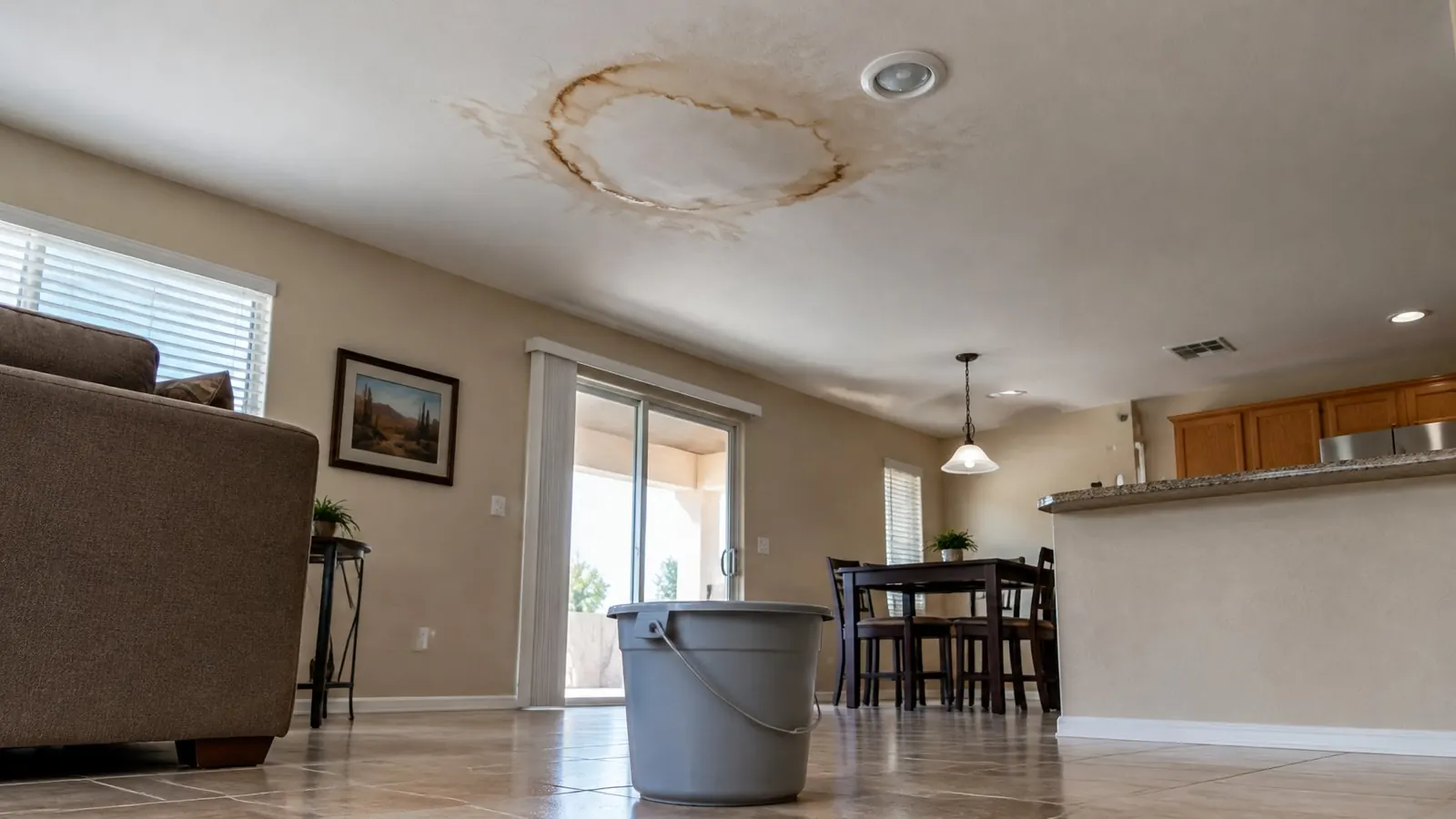
On a flat roof, rain has to leave through scuppers or drains. If leaves, dust or debris block them, water ponds on the roof and works into seams and penetrations, such as the curb around a rooftop cooler or AC unit. On tile roofs, the tiles shed most of the water while the underlayment beneath does the real waterproofing, and when that ages, leaks show up as ceiling stains.
At ground level, rain that falls faster than the ground can take it runs across yards and driveways. Doorways, sliding door tracks and low spots in the yard are where it most often comes in.
A wet ceiling should be treated with care. Drywall that holds water can sag and give way, and wet insulation above it keeps the ceiling damp long after the rain stops. The roof repair is a roofer's job; drying the ceiling, walls and floor is the restoration contractor's.
Right now
During and after the storm
- Keep people and pets out from under a sagging or bulging ceiling.
- Put buckets and towels under drips, and move furniture and electronics away.
- Turn off power to light fittings or fans in a wet ceiling, at the breaker.
- Photograph the stain, the drip and the roof area above it once it is safe to look.
- Don't climb onto a wet roof or go up during lightning.
- Call your insurer to ask how storm damage is handled under your policy.
Local detail
Monsoon facts for Mesa
The season
The National Weather Service in Phoenix treats June 15 to September 30 as monsoon season, when damaging winds, torrential rain, frequent lightning and dust storms are most likely.
Source: NWS Phoenix: Monsoon Awareness
Downburst winds
NWS Phoenix describes downbursts as concentrated downdrafts that can produce winds of 50 mph or more at the ground, enough to lift roofing and push rain sideways.
Source: NWS Phoenix: Monsoon Awareness
Sand and bags from the city
Mesa's Transportation Department lists sand and empty bags at five Mesa fire stations and two Transportation sites before and during the season. Bring a shovel; fill bags one-half to two-thirds full.
Re-roofing permits
Mesa's residential FAQ says a roof can be replaced with the same type of material or better. Emergency repairs that do need a permit should be applied for by the next business day.
How the call works
Four steps, and you stay in charge
- 01
Call and describe it
Say what got wet, where the water came from and when you first noticed it. That is enough to start.
- 02
Get put through
Your call is routed to an independent restoration contractor working in Mesa and the surrounding East Valley.
- 03
Inspection and scope
The contractor looks at the damage, takes moisture readings and explains the work and their price in writing.
- 04
Your decision
Nothing is booked until you agree. Check their ROC licence, call your insurer and ask anything you need to.
Questions
Monsoon and Roof Leak Damage: common questions
Does homeowners insurance cover rain coming through the roof?
It depends on how the water got in and on your policy. Many policies treat rain differently when it enters through storm damage than when it comes through an old, worn roof. Flood water entering at ground level is generally a flood insurance matter. Ask your insurer.
The stain is dry now. Is it still a problem?
It might be. Insulation and the back of the drywall can stay damp, and the leak itself is probably still there for the next storm. A moisture reading tells you whether the ceiling is actually dry.
Can the contractor tarp the roof?
Some restoration contractors offer temporary roof covering; others refer it to a roofer. Ask when you call.
Other situations
Something else going on?
- Water Damage RestorationAny leak, overflow or storm intrusion: water out, materials dried to normal readings, damaged parts rebuilt.Read more
- Water Extraction and Structural DryingStanding water pumped and vacuumed out, then air movers and dehumidifiers until readings are normal.Read more
- Burst and Split PipesA supply line splits inside a wall or under a sink: water off, wet areas found, the structure dried.Read more
- Slab LeaksWarm floor, damp tile or a meter that keeps turning: help with the water damage once the leak is found.Read more
- Sewage Backup CleanupSewage from a toilet, tub or floor drain: contaminated materials removed, the area cleaned and dried.Read more
- Water Heater and Appliance LeaksWater heater, AC drain line, swamp cooler, dishwasher or washer: the water found and the area dried.Read more
- Fire and Smoke DamageSoot on walls and ceilings, smoke odor, and the water left behind by firefighting, cleaned up.Read more
- Mold RemediationMold after a leak: moisture source fixed, affected materials removed, the area cleaned and dried.Read more
Water, smoke or mold in the house
Talk it through with a Mesa restoration contractor
A short call gets the facts in front of someone who does this work every week: where the water came from, which rooms it reached and how long things have been wet. You choose what happens next.
Water where it shouldn't be? Make the call.
The line connects you with an independent restoration contractor working in Mesa and nearby East Valley towns. Describe the damage, then decide whether to book.
Call (480) 863-0892Calls may be recorded. Read the referral disclosure and privacy policy.