Slab Leaks
Slab leak water damage in Mesa
When a pipe under or inside a concrete floor leaks, the first sign is often a damp patch, lifting tile or a meter that won't stop moving. Call to talk with an independent restoration contractor about the water damage.
What happens
How slab leaks show up
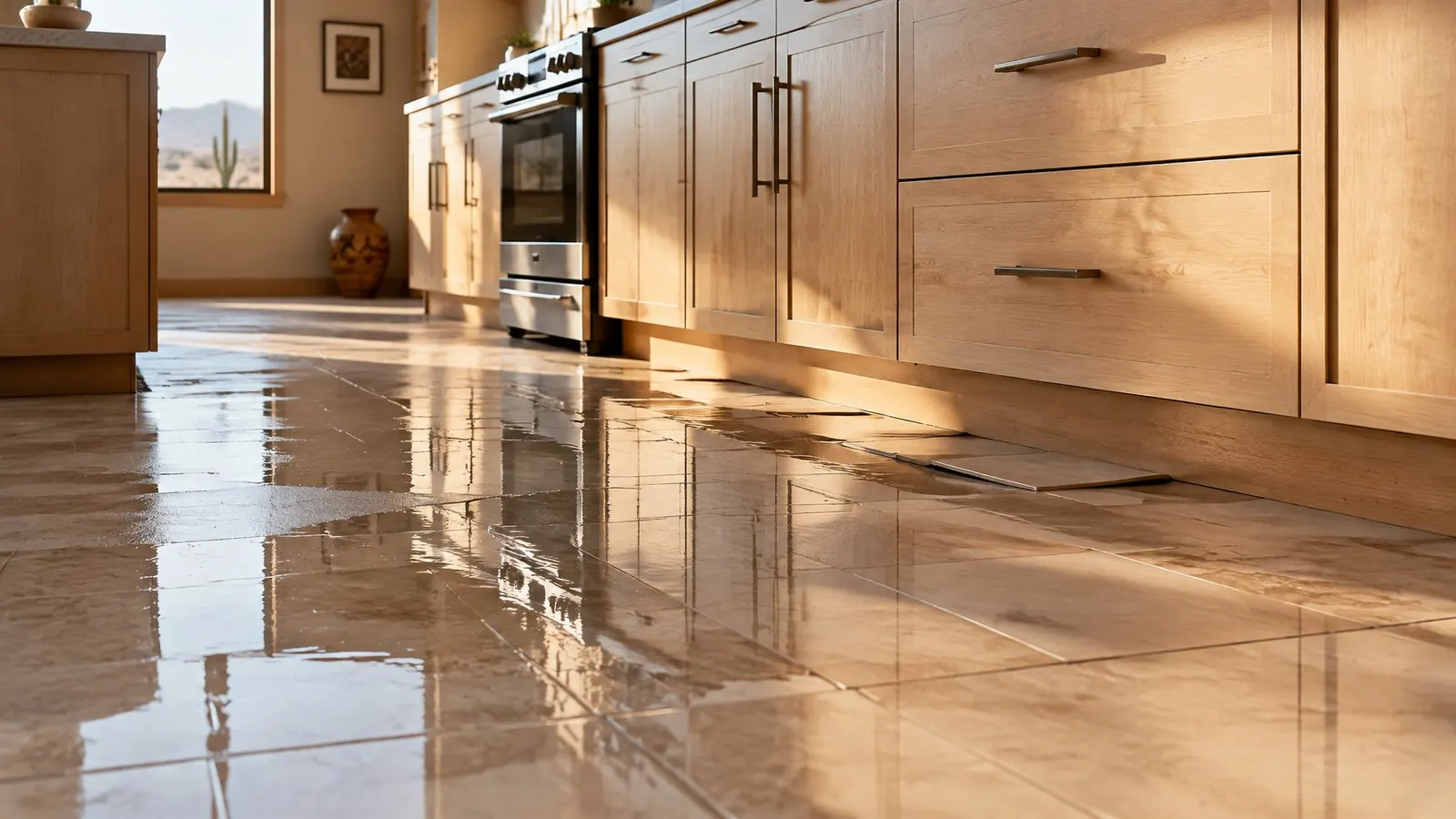
In a house built on a concrete slab, some water and drain lines run beneath or through the concrete. A leak there has nowhere to go except up through joints, along the edges of walls or into flooring. Warm spots on the floor point to a hot-water line; damp carpet tack strip or a musty smell along one wall can point to either.
Finding and fixing the leak is a plumber's job, usually with listening equipment and pressure tests. The restoration side is what follows: lifting wet flooring, drying the slab surface and the bottom of nearby walls, and checking cabinets and baseboards for water that wicked upward.
Concrete dries slowly, and flooring glued or laid over a wet slab can fail later. Ask the contractor how they will confirm the slab surface is dry before new flooring goes down.
Right now
Signs worth a closer look
- A warm or hot patch on tile or carpet that isn't from sunlight.
- The water meter moving when every fixture in the house is off.
- Cracked or loose tile, or grout that stays dark in one area.
- Damp carpet or a musty smell along one wall.
- A water bill that rises without a change in how you use water.
- The sound of running water when nothing is on.
Local detail
Checking the meter in Mesa
Leaks past the meter are yours
The city repairs leaks at water meters and mains. Leaks on the customer side of the meter, including the line to the house and indoor plumbing, are the owner's responsibility.
A quick meter test
Turn off every fixture, look at the meter's dial, wait without using any water, and look again. If it moved, water is going somewhere. The City of Mesa links to its own guide on reading the meter from its utility emergency page.
How the call works
Four steps, and you stay in charge
- 01
Call and describe it
Say what got wet, where the water came from and when you first noticed it. That is enough to start.
- 02
Get put through
Your call is routed to an independent restoration contractor working in Mesa and the surrounding East Valley.
- 03
Inspection and scope
The contractor looks at the damage, takes moisture readings and explains the work and their price in writing.
- 04
Your decision
Nothing is booked until you agree. Check their ROC licence, call your insurer and ask anything you need to.
Questions
Slab Leaks: common questions
Will the floor have to be broken up?
Sometimes. A plumber may open the slab at the leak, or reroute the line through walls or the attic instead. That decision is the plumber's. The restoration contractor deals with the wet flooring and walls either way.
Is slab leak damage covered by homeowners insurance?
Policies differ. Arizona's insurance department says water damage not caused by a flood may be covered when it results from a sudden or accidental event. Slow leaks over a long time are treated differently by many policies, so read yours or ask your insurer.
Can mold grow under tile?
Mold needs moisture and something organic to feed on. Grout, backer board, carpet pad and the bottom of drywall near a slab leak can all stay wet long enough to grow it, which is why drying is measured, not assumed.
Other situations
Something else going on?
- Water Damage RestorationAny leak, overflow or storm intrusion: water out, materials dried to normal readings, damaged parts rebuilt.Read more
- Water Extraction and Structural DryingStanding water pumped and vacuumed out, then air movers and dehumidifiers until readings are normal.Read more
- Burst and Split PipesA supply line splits inside a wall or under a sink: water off, wet areas found, the structure dried.Read more
- Sewage Backup CleanupSewage from a toilet, tub or floor drain: contaminated materials removed, the area cleaned and dried.Read more
- Monsoon and Roof Leak DamageRain through a flat or tile roof, a blocked scupper or under a door: wet ceilings and floors dried out.Read more
- Water Heater and Appliance LeaksWater heater, AC drain line, swamp cooler, dishwasher or washer: the water found and the area dried.Read more
- Fire and Smoke DamageSoot on walls and ceilings, smoke odor, and the water left behind by firefighting, cleaned up.Read more
- Mold RemediationMold after a leak: moisture source fixed, affected materials removed, the area cleaned and dried.Read more
Water, smoke or mold in the house
Talk it through with a Mesa restoration contractor
A short call gets the facts in front of someone who does this work every week: where the water came from, which rooms it reached and how long things have been wet. You choose what happens next.
Water where it shouldn't be? Make the call.
The line connects you with an independent restoration contractor working in Mesa and nearby East Valley towns. Describe the damage, then decide whether to book.
Call (480) 863-0892Calls may be recorded. Read the referral disclosure and privacy policy.