Sewage Backup Cleanup
Sewage backup cleanup in Mesa
Sewage in the house is a health problem as well as a water problem. Keep everyone out of the area and call to be connected with an independent contractor who handles contaminated water.
What happens
Why sewage is handled differently
Water from a sewer line carries bacteria and other contaminants, so porous materials it touches, like carpet, pad, the bottom of drywall and some cabinetry, are usually removed rather than dried. Hard surfaces are cleaned and disinfected, then the area is dried and checked before rebuilding.
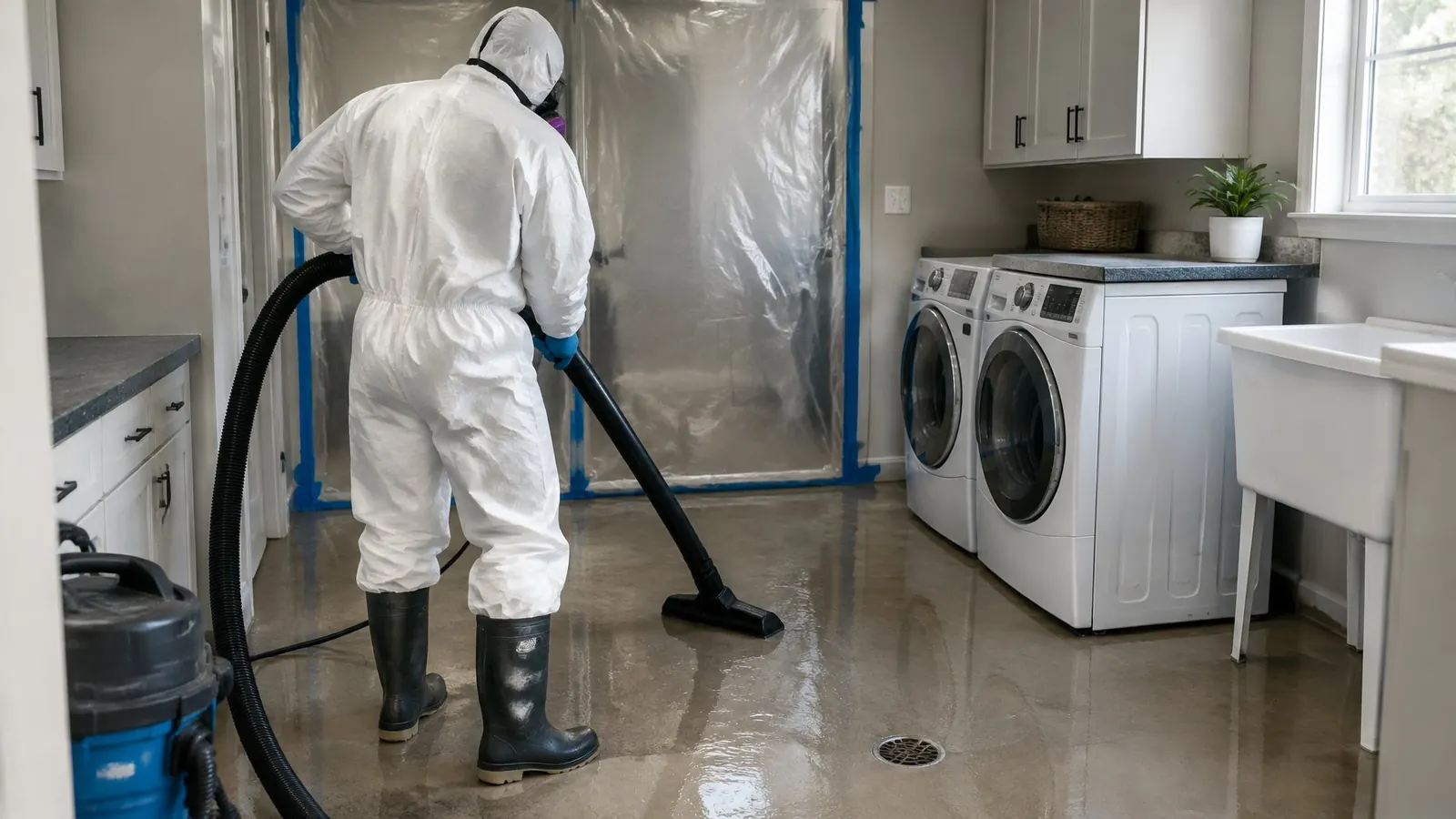
Workers wear protective suits, gloves, boots and respirators for a reason. If sewage reached a room, keep children and pets out, don't run the HVAC system through it, and wash your hands well if you touched anything.
Where the blockage sits matters for who fixes the pipe. In Mesa, the city looks after the sewer main in the street or alley; the line from the main to the house, including the connection, belongs to the property owner.
Source: City of Mesa: Report a Utility Emergency · City of Mesa: Wastewater
Right now
While you wait
- Stop using water: no flushing, showers, dishwasher or washing machine until the line is cleared.
- Keep people and pets away from the affected rooms.
- Don't try to mop sewage into other drains.
- Photograph the backup, the fixture it came from and any damaged belongings.
- If sewage is overflowing from a manhole or the street, report it to the City of Mesa on 480-644-2262.
- Throw away food, toys or soft items that sewage touched; your contractor can advise on the rest.
Local detail
Mesa sewer lines: who does what
The main is the city's
Mesa is responsible for sewer mains in the street or alley, including cleaning and repair. Sanitary sewer overflows and backups are listed as water emergencies: 480-644-2262.
The lateral is yours
The city's wastewater page puts it plainly: maintaining and cleaning the lateral line falls to the property owner. Most blockages come from things put down drains, or tree roots that get into a joint or crack.
Source: City of Mesa: Wastewater
If the plumber finds a main-line problem
When a licensed plumber finds the blockage is in the city main, call Wastewater Collection. The city charges a fee to inspect and asks you to sign a Sewer Blockage Waiver Form.
Source: City of Mesa: Wastewater
Grease and wipes
Mesa asks residents to pour fats, oil and grease into a container for the trash, and to bin wipes, which don't break apart in sewer lines.
Source: City of Mesa: Wastewater
How the call works
Four steps, and you stay in charge
- 01
Call and describe it
Say what got wet, where the water came from and when you first noticed it. That is enough to start.
- 02
Get put through
Your call is routed to an independent restoration contractor working in Mesa and the surrounding East Valley.
- 03
Inspection and scope
The contractor looks at the damage, takes moisture readings and explains the work and their price in writing.
- 04
Your decision
Nothing is booked until you agree. Check their ROC licence, call your insurer and ask anything you need to.
Questions
Sewage Backup Cleanup: common questions
Is a sewage backup covered by homeowners insurance?
Often only if the policy has a water backup or sewer backup endorsement; many standard policies exclude it otherwise. Check your declarations page or ask your insurer, and photograph everything before cleanup starts.
Can I clean a small backup myself?
A small overflow from a toilet onto tile can sometimes be handled with gloves and disinfectant. Once sewage reaches carpet, drywall or spreads across rooms, a contractor with protective equipment and the right cleaning process is the safer route.
Who clears the blockage?
A plumber or drain cleaner clears blockages in your line. If they find the problem is in the city's main, Mesa's Wastewater Collection team takes over that part.
Other situations
Something else going on?
- Water Damage RestorationAny leak, overflow or storm intrusion: water out, materials dried to normal readings, damaged parts rebuilt.Read more
- Water Extraction and Structural DryingStanding water pumped and vacuumed out, then air movers and dehumidifiers until readings are normal.Read more
- Burst and Split PipesA supply line splits inside a wall or under a sink: water off, wet areas found, the structure dried.Read more
- Slab LeaksWarm floor, damp tile or a meter that keeps turning: help with the water damage once the leak is found.Read more
- Monsoon and Roof Leak DamageRain through a flat or tile roof, a blocked scupper or under a door: wet ceilings and floors dried out.Read more
- Water Heater and Appliance LeaksWater heater, AC drain line, swamp cooler, dishwasher or washer: the water found and the area dried.Read more
- Fire and Smoke DamageSoot on walls and ceilings, smoke odor, and the water left behind by firefighting, cleaned up.Read more
- Mold RemediationMold after a leak: moisture source fixed, affected materials removed, the area cleaned and dried.Read more
Water, smoke or mold in the house
Talk it through with a Mesa restoration contractor
A short call gets the facts in front of someone who does this work every week: where the water came from, which rooms it reached and how long things have been wet. You choose what happens next.
Water where it shouldn't be? Make the call.
The line connects you with an independent restoration contractor working in Mesa and nearby East Valley towns. Describe the damage, then decide whether to book.
Call (480) 863-0892Calls may be recorded. Read the referral disclosure and privacy policy.